Axes Design Ltd has extensive experience of rebuilding Garrett and IHI turbochargers using ball race cartridges as used in the WRC from late 1990’s onward.
Because the FIA mandate intake restrictors on the turbochargers , conventional road car turbochargers are not optimised for the application. Specially engineered devices are required for the teams to remain competitive and two different manufacturers , IHI and Garrett, took on the challenge.
IHI ball race turbochargers were used on the Subaru Legacy and later the world championship winning GpA Subaru Impreza as of Colin McRae . The early models evolved into the RX6 , variants of which were used on the Ford Escort WRC and all the Subaru WRC cars after 1998 . These devices all used the same dual ball race cartridge design relying on two super precision angular contact bearings with a conventional spring pre-load design to handle both radial and thrust loads. The turbocharger shaft operates at speeds above critical ,facilitated by the oil damped bearing cartridge in which the ball bearings are located..
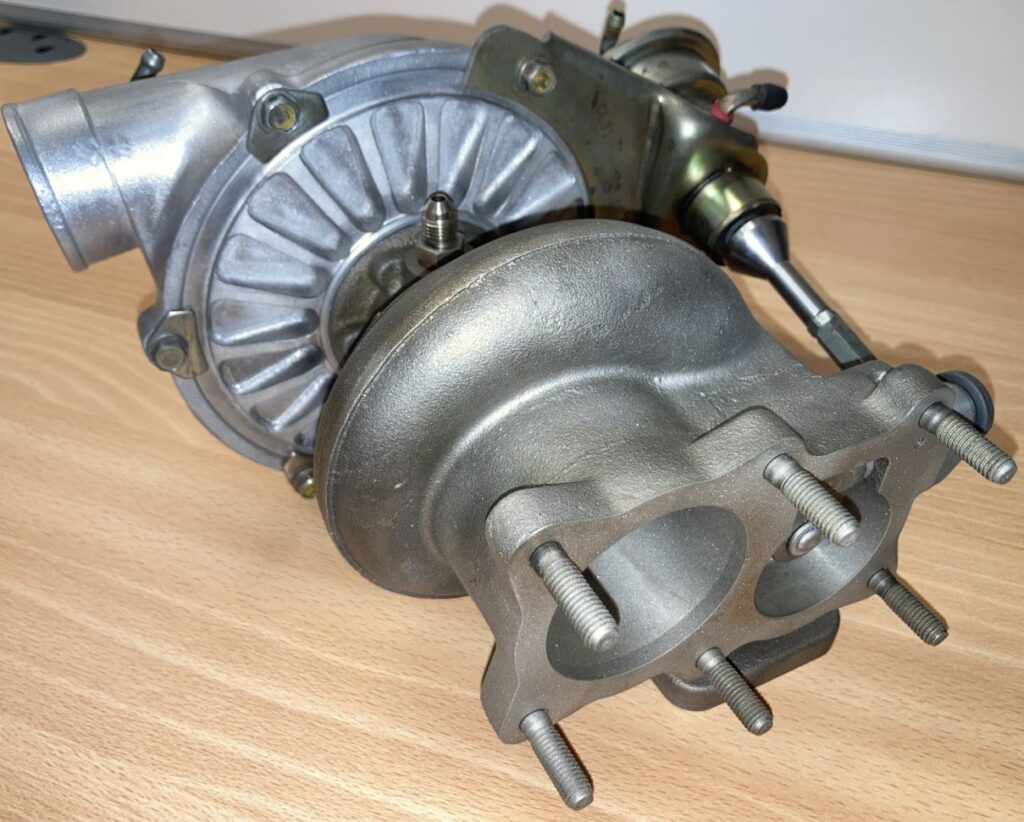
Garret supplied Ford Motorsport in the GpA era with road car derived turbos ( T3) with conventional bearings . Their first ball race machine for rallying, the TR30R was supplied for the 1999 Ford Focus WRC car built by MSport. Early versions used a cast iron central housing with band clamps on both compressor and turbine flanges requiring an external waste gate . The bearing cartridge , which was a Garrett design is a novel single cartridge with integral races with rolling element bearings at each end with the pre-load set by tight production tolerances. Like the IHI , the cartridge is damped by a thin oil file. Over the years the TR30R was enhanced by a titanium central housing , dual speed sensors, a magnesium compressor housing with a large radial diffuser and an inconel turbine housing .It continued to be used on the 1.6litre WRC cars including the Fiesta WRC, which Axes have also rebuilt for customers.
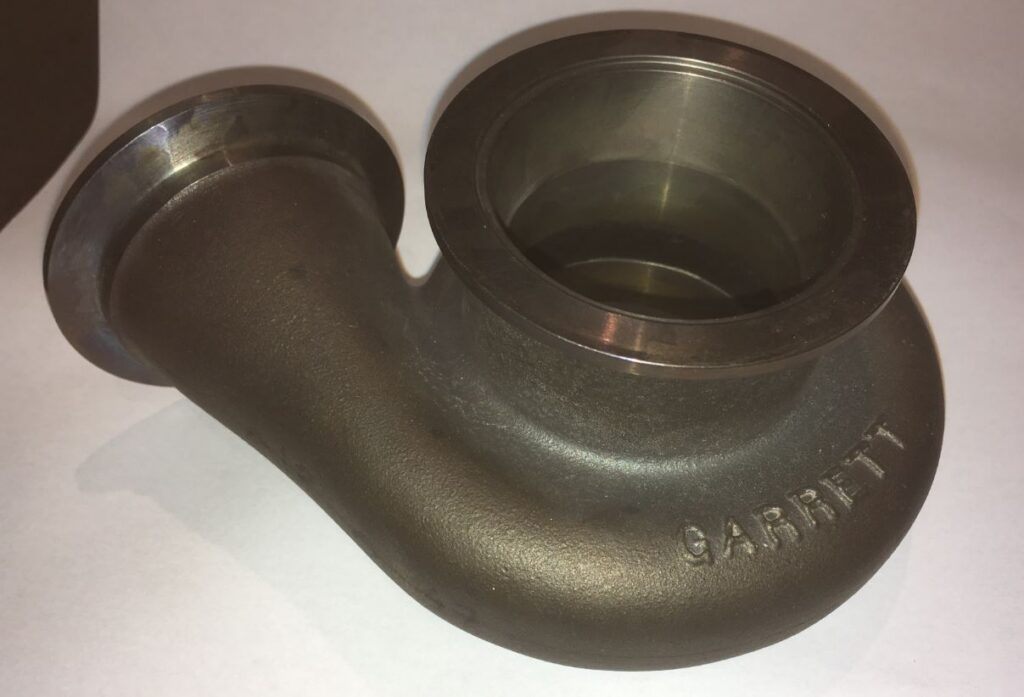
Rebuilding turbochargers of this type to make them suitable for competition use is a demanding process mainly because replacement parts are not available and the many variants of the devices makes it un-economical to consider re-manufacture of these components .
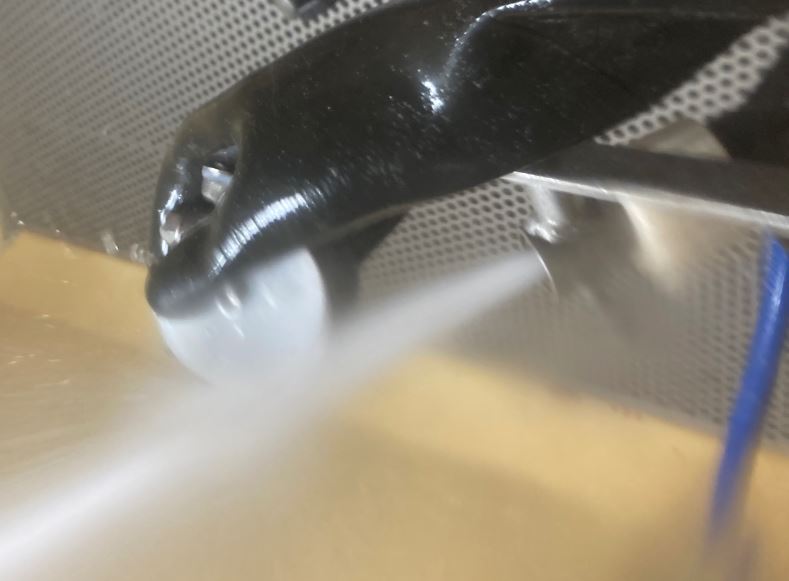
All our rebuilds start with a strip down and thorough clean including in house vapour blasting of appropriate surfaces.
Turbine wheels are checked for shaft distortion and ring grooves and compressor ring seals are measured and replaced with new ones of standard or oversize dimensions . Mating surfaces are machined to suit.
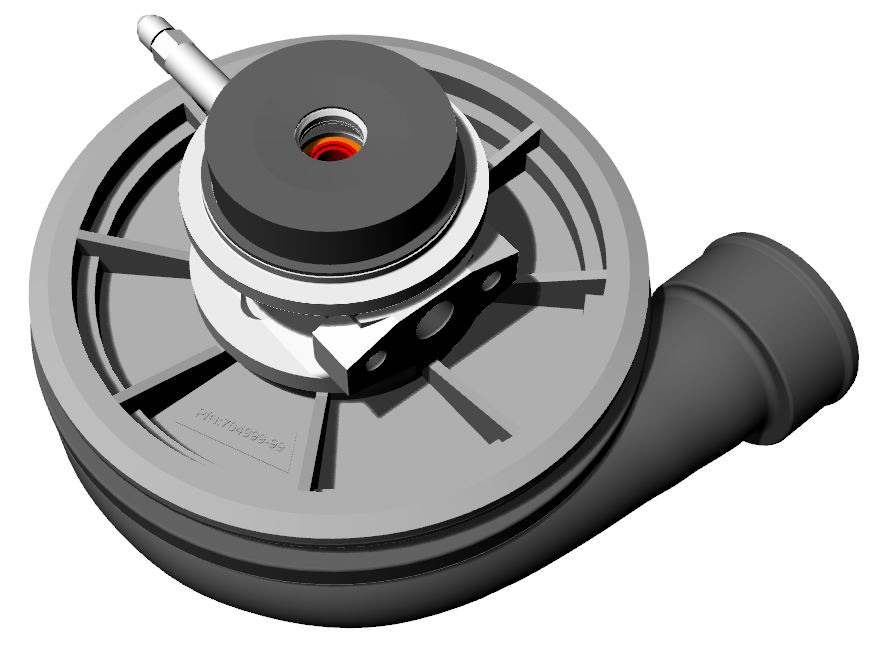
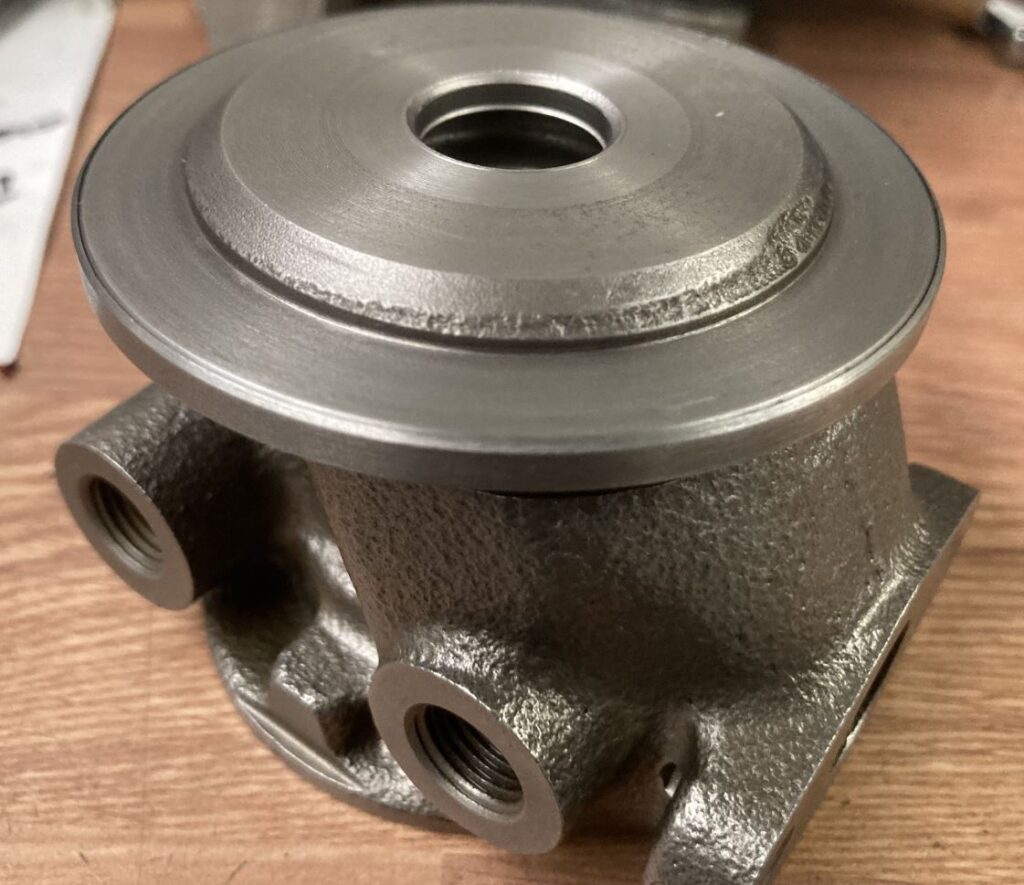
Housings , back-plates and heat shields are inspected and then accurately measured using our coordinate measurement machine (CMM) . The measurements to +/- 5 microns precision are exported to our 3D CAD software so we can quantify eccentricity and distortion present in the housings and back-plates.
Often resulting from age and aggressive operation , housings and back-plates are distorted out of acceptable tolerances or corroded and worn enough to allow contact with the wheels if the turbocharger was simply reassembled . If we are unable to replace out of tolerance components, we will carry out re-alignment or jig straightening and in extreme cases re-machining to recover these historic components.
We balance rotating components as a two plane process,when turbine or compressor wheel profiles are adjusted. At final assembly a single plane process is used where the compressor wheel nut and if necessary the compressor wheel is machined to achieve acceptable balance.
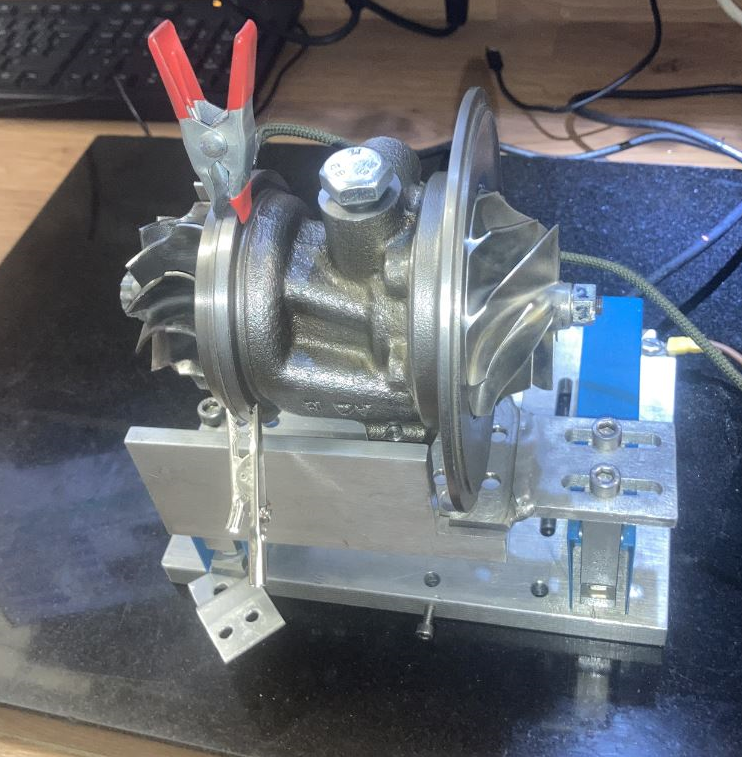
We have developed a bespoke method of balancing the built up rotating assembly which is ideally suited to ball race turbos as it is very sensitive and can be safely used at low speeds ( < 6,000 rpm) without the need for pressurised oil . The shaft is rotated by a short burst of compressed air and measurements of imbalance are taken during coast down when signal to noise ratio is optimum.
Unlike conventional soft and hard bearings methods of balancing components our system uses resonant mounts to greatly improve sensitivity under measurement conditions allowing balancing to be carried out on a desktop.
All additional components such as speed sensors and waste gate actuators are tested and calibrated as part of the rebuild process and a report detailing the work carried out is provided.
.